
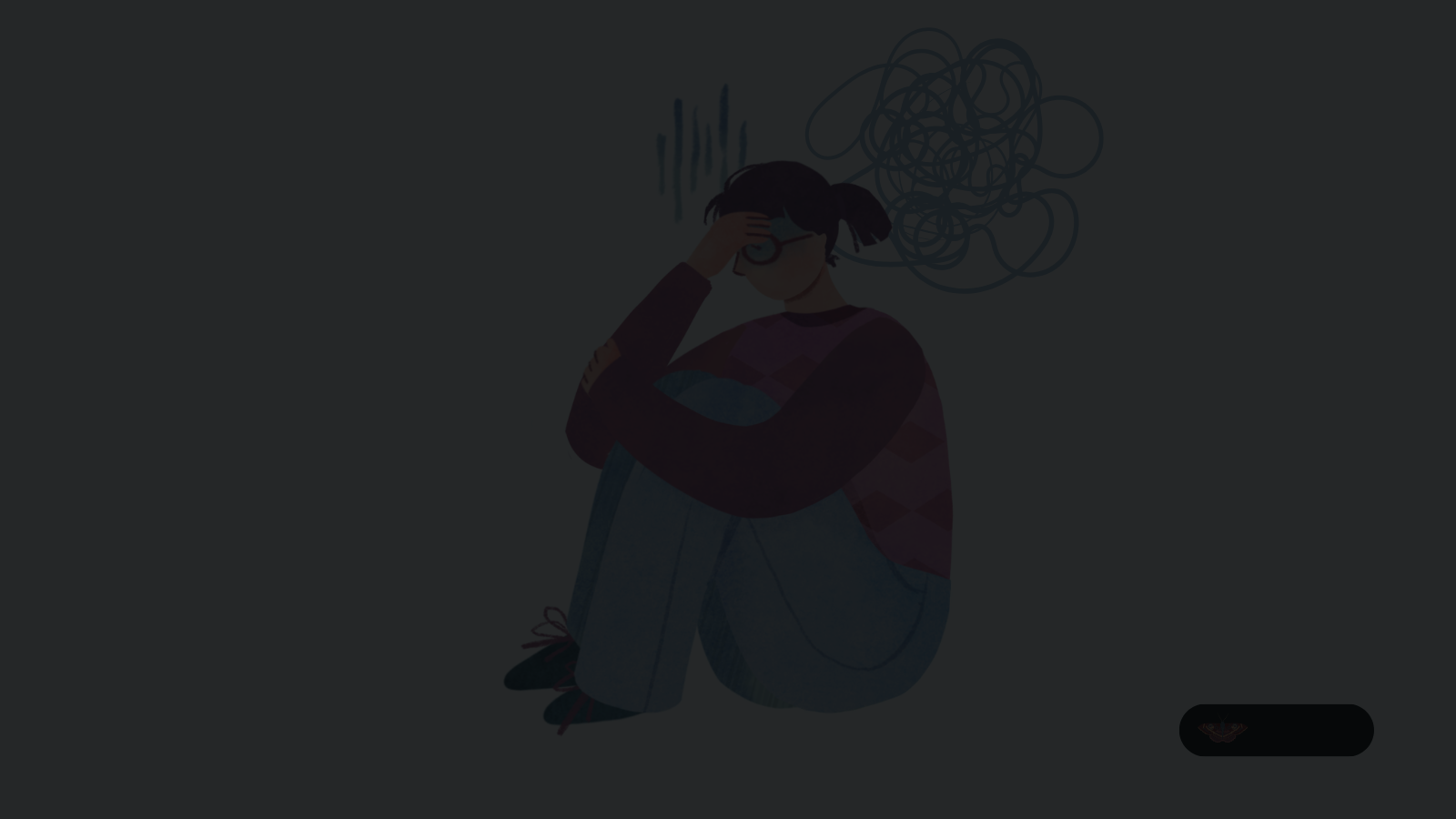
Feeling anxious can be incredibly uncomfortable.
You might notice racing thoughts, a tight chest, a churning stomach, irritability, restlessness, the urge to run away, or simply a feeling that you cannot settle in your own body. Sometimes you know exactly what has triggered your anxiety. Other times, it can seem to come completely out of nowhere.
When you’re struggling with anxiety, it’s understandable to want to find a quick fix. You might search for how to help anxiety, what to do when anxious, or how to stop feeling anxious and find yourself presented with a long list of things you “should” be doing.
But I think there is something important that can get missed here.
Understanding anxiety can be a really helpful part of helping yourself, rather than immediately jumping into trying to fix it.
Understanding what is happening in your body and mind can completely change your perspective. It can also help you work out what you actually need, rather than simply following someone else’s idea of what should make anxiety go away.
Anxiety is a normal human response. It has a purpose. And learning to work with it, rather than seeing it as something that needs to be eliminated completely, can be a really important part of managing anxiety.
This blog looks at what anxiety actually is, what you can do when you feel anxious in the moment, and how you can build your capacity to cope with anxiety over time.
It isn’t a replacement for professional support. If anxiety is significantly affecting your life, relationships, work or day-to-day functioning, therapy can provide a space to explore what is happening and why.
What anxiety actually is: the missing piece to supporting yourself
At its simplest, anxiety is part of your body’s alarm system.
Humans have evolved to detect potential threats and respond quickly. Your nervous system is designed to notice danger and prepare you to deal with it. This is incredibly useful when there is an immediate physical threat.
Your body can mobilise you to fight, flee or otherwise respond.
The problem is that our alarm systems don’t only respond to physical danger.
Your brain can detect potential threat in an interview, an argument, driving on a busy road, going to work, sending an email, speaking to someone you find intimidating, or even thinking about something that happened in the past.
And for some people, particularly following prolonged stress, difficult experiences, trauma or other life circumstances, the alarm system can become more sensitive to particular types of threat.
So the anxiety itself isn’t necessarily the enemy.
It is your body trying to protect you.
The question becomes: what is your alarm system detecting, and does it need support to respond differently?
This is where I think it can be helpful to think about anxiety in two ways: what can help you in the moment, and what can help you build capacity over time.
We want to have strategies for those moments when you’re feeling completely wired, your thoughts are racing and you don’t know what to do with yourself.
But we also want to think about the bigger picture, so you aren’t relying solely on a reactive approach every time anxiety appears.
The aim isn’t to never feel anxious.
It’s about becoming better able to move through stress and anxiety, recover from it, and return to a more settled state.
Going back to basics
This can sometimes feel like the boring advice.
You’re struggling with anxiety and someone tells you to eat properly, drink some water and get some sleep.
It probably isn’t the magical fix you were hoping for.
And to be clear, these things aren’t going to fix anxiety.
But they can make a difference to your overall capacity to cope with stress.
When you’re already struggling with anxiety, it’s worth asking yourself some very basic questions:
- Are you eating enough?
- Are you drinking enough?
- Are you giving your body enough fuel?
- Are you getting some movement into your day?
- Are you getting enough rest and sleep?
- Are you connected to people you trust?
- What is your environment like?
- Are there things in your daily life that are continually keeping you under pressure?
Your body and brain don’t exist separately from the rest of your life.
If you’re exhausted, under-fuelled, isolated and constantly overwhelmed, your capacity to deal with additional stress may be reduced.
This doesn’t mean that improving your lifestyle will magically make anxiety disappear. It means you’re giving yourself a stronger foundation from which to work.
Sometimes supporting anxiety starts with looking at the things we can easily overlook.
What to do when you’re feeling anxious
When anxiety kicks in, your body is often moving into a state of mobilisation.
You may feel wired, restless, angry, agitated or desperate to get away. Your heart may be racing and your muscles may feel tense. You might want to avoid the situation completely.
This makes sense when you understand what the stress response is designed to do.
Your body is preparing you to respond to a perceived threat.
And this is why one anxiety strategy doesn’t necessarily work for everyone.
You might have been told to sit down, meditate and take some deep breaths.
For some people, that can be incredibly helpful.
For others, when they’re already highly activated, sitting still and focusing on their breathing can feel almost impossible.
Sometimes you need to move first.
You could experiment with things such as:
- Going for a brisk walk
- Running
- Dancing
- Shaking your body
- Rocking
- Dynamic yoga
- Doing jumping jacks
- Cleaning or tidying
- Going up and down the stairs
- Moving your body in whatever way feels accessible at the time
The idea isn’t to punish yourself with exercise or force the anxiety away.
It can simply be a way of giving your body somewhere to channel some of that activation. To close the stress loop that it opened.
Then, once you feel a little less activated, you might find things such as breathing exercises, grounding, stretching, meditation or spending time in nature more accessible.
Sometimes regulation starts with movement. Sometimes it starts with stillness.
The important thing is learning what works for you.
Start noticing how anxiety shows up for you
If you’re struggling with anxiety, one of the most useful things you can do is start paying attention to your own patterns.
Rather than immediately trying to stop the anxiety, spend a couple of weeks simply mapping what happens.
You could ask yourself:
What happened?
What was going on immediately before you noticed the anxiety?
What thoughts did you have?
Were you thinking about something going wrong? Were you anticipating a conversation? Were you worrying about what someone thought of you?
What happened in your body?
Did your heart race? Did you feel hot, shaky, nauseous, tense or restless?
How did you respond?
Did you become angry? Walk away? Avoid something? Scroll social media? Clean? Shut down? Collapse on the sofa? Try to distract yourself?
There is no right or wrong answer here.
The aim is to start building a map of your own anxiety.
Once you understand your patterns, you can start experimenting with different ways of responding.
Practise your strategies before you need them
One thing that can be really helpful is practising your chosen anxiety strategies when you’re not anxious.
If you only ever try a new technique when you’re already completely overwhelmed, it can be difficult to know whether it actually works for you. And to even remember to do it in the first place. Trying to access logic in a moment of activation is difficult enough.
Instead, practise.
Try your breathing exercises when you’re relatively calm. Experiment with grounding. Go for a walk and notice how your body feels afterwards. Try movement, stretching or another strategy that feels useful.
You’re essentially building familiarity.
Then, when you are activated, you have something you can draw on.
This isn’t about finding the one perfect anxiety technique.
It’s about developing a toolbox and learning how to tune into yourself.
Building capacity for anxiety over time
Managing anxiety isn’t only about knowing what to do when you’re already overwhelmed.
There is also the longer-term work of building your capacity to experience stress, anxiety and difficult emotions without feeling completely consumed by them.
This might involve looking at your lifestyle, your relationships, your environment and the patterns that keep you stuck.
As well as developing a stronger support system, learning more about your nervous system and how you respond to stress. And sometimes, it means exploring the deeper roots of your anxiety.
Long-term support for anxiety can include:
Self-care and basic needs
Looking at sleep, food, movement, rest and the things your body needs to function.
Your support system
Considering who you can talk to, where you feel safe and whether you have people around you who understand and support you.
Your environment and lifestyle
Looking at the demands being placed on you and whether there are changes that could reduce ongoing stress.
Your tools and resources
The things that you have to support you in the moment, and in life in general.
Your ability to handle a situation
The trust and belief you have in yourself to handle a difficult situation, as well as the support and resources to help yourself.
Therapy
Therapy to explore what your anxiety is trying to tell you, where your patterns may have come from, and developing a different relationship with your thoughts, emotions and stress responses.
You don’t have to fix anxiety
Perhaps one of the biggest shifts can come from moving away from the idea that you need to get rid of anxiety.
Anxiety is part of being human.
The goal isn’t necessarily to never feel anxious again. It is to understand your anxiety, recognise what is happening, know how to support yourself when you’re activated, and gradually build your capacity to move through difficult experiences.
So, if you’re feeling anxious right now, start small.
Notice what is happening.
Ask yourself what you need.
And remember that you don’t have to figure it all out at once.
If anxiety is becoming difficult to manage on your own, therapy can give you a space to explore what is happening beneath the surface and work out what support might actually be right for you.
If you’re struggling with anxiety and would like some support, get in touch to book a therapy session. We can start from where you are and work out what you need together.
Leave a Reply